
January 2026 F.I.R.S.T. Newsletter 1 – Busy Isn’t The Same as Strategic
Happy January!
To support you in being F.I.R.S.T. (Future-Ready. Innovative. Relevant. Strategic. Trusted.), here’s 1 tip and 1 quote.

The F.I.R.S.T. Tip
As teams across the world return to work in the new year with fresh priorities and full inboxes, the question is not how busy the next quarter will be.
The real question is whether that busyness translates into real business impact.
Most leaders we work with do not struggle because they lack effort. They struggle because leadership judgment and strategic decision-making get crowded out by constant activity.
This tension between strategic leadership versus busyness is one of the biggest challenges leaders face today.
A senior director recently shared this with us:
“I worked 12-hour days for three months. At the end, my team delivered everything on the list. But when my CEO asked what changed strategically, I had no answer.”
The work was real.
The exhaustion was real.
But the impact was difficult to define or defend.
Don’t get me wrong, this is not about working less.
It is about recognising that activity and progress are not the same thing.
That distinction defines strategic leadership today.
From Activity to Strategic Leadership
This is where leadership development grounded in the F.I.R.S.T.™ framework becomes critical.
Being Future-Ready, Innovative, Relevant, Strategic, and Trusted shapes how people think, decide, influence, and lead — especially under pressure.
Strategic leaders do not simply respond to what is urgent.
They create space to ask whether the urgent work is actually important, and how it contributes to the strategic goals of the organisation.
Three Strategic Leadership Priorities for High-Performing Teams
1. Clarity Over Coverage
Busy leaders try to cover everything. Strategic leaders decide what not to do.
When everything is a priority, nothing is.
Strategic clarity means naming the two or three outcomes that genuinely move the business forward and protecting them from distraction.
Try this:
Ask your team, “If we could only achieve two outcomes this quarter, what would they be?”
Then ask, “What are we doing that does not serve those outcomes?”
2. Judgment Over Speed
Strong leadership judgment requires pausing to ask whether you are solving the right problem.
That pause may feel inefficient.
But solving the wrong problem quickly is far more costly.
Try this:
Before approving the next initiative, ask, “What problem are we really trying to solve?”
If the answer is unclear, the work is not ready.
3. Alignment Over Activity
Teams can be exceptionally busy and still misaligned.
Strategic leaders ensure people understand not just what they are doing, but why it matters and how it connects to business outcomes.
This is where high-trust leadership and influential communication show up — ensuring that intent is clear, decisions are understood, and people feel ownership.
Try this:
In your next one-to-one, ask, “How does your current work connect to our strategic priorities?”
Case in Point
A regional operations team we worked with was managing 18 active projects, all labelled strategic.
We helped them apply clarity and alignment discipline, reducing this to five core initiatives directly tied to business outcomes.
Within 90 days:
- Decision speed improved by 40 percent.
- Leaders reported stronger confidence in their judgment.
- The team felt more in control — not because they did less, but because they focused on what mattered.
This is how high-performing teams are built.
This Month’s Action Focus
One clarity action: Identify one project that does not serve strategic priorities — and stop it.
One alignment action: Have one conversation that explicitly links work to outcomes.
One judgment action: Before approving the next request, ask, “What problem are we solving?”
Build Strategic Leadership Capability
If you’re noticing that your leaders and teams are working hard but struggling to create clear strategic impact, it may not be an effort issue.
It may be a judgment and alignment challenge.
The F.I.R.S.T.™ Leadership Programme supports organisations in strengthening leadership judgment, building high-trust leadership, and helping leaders translate strategy into decisive action through clarity, alignment, and influence.
It is often a fit for senior leaders and leadership teams who are accountable for outcomes, not just execution.
If this reflects what you’re seeing in your organisation, we’d be happy to have a conversation.
Explore our leadership development programmes
Connect with us
Trusted by over 500 organisations, including KPMG, Ernst & Young, P&G, and Sembcorp Industries.
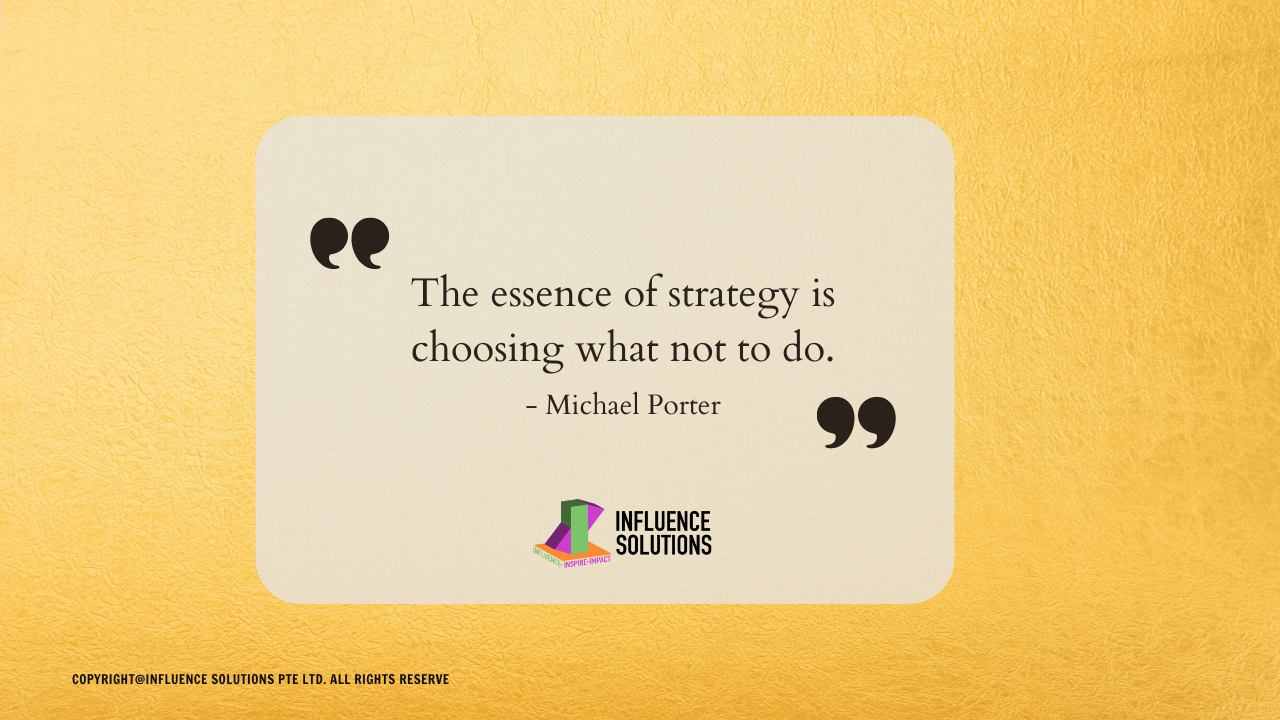
The F.I.R.S.T. Quote